Recently, the ECPN has expanded their social media network to include a Facebook group. In the survey sent out by AIC asking what members wanted from the ECPN; the vast majority stated that the original Ning site was outdated and they would prefer a Facebook page. Ask and you shall receive.. Emerging Conservation Professionals Network.
The group page is open to anyone who would like to join and there are currently 83 members. The page is also open to allow anyone that wishes to post to the wall, start discussions, post events, and pictures.
The hope is that the Facebook group will give AIC and ECPN members, prospective members, and those just interested in conservation a place to openly and informally chat about events, programs, projects, etc. This is the place to through out questions like; "Does anyone want to share a hotel room at AIC?" or "Who has gone through the graduate program at X and did you have professor X?".
Remember this is your social media so it only works if you use it. So invite your classmates and friends and start connecting.
Tuesday, April 20, 2010

Monday, April 12, 2010
"500 Words or Less."
"500 Words or Less." A workshop about writing abstracts or short proposals. 20 April 2010 . 11am US Eastern time (GMT -5) 90 minutes.
More information at http://bit.ly/AWW_410 or http://bit.ly/AWW_410sc
Members of the Emerging Conservation Professionals can claim the discount by noting "ECPN" in the discount code section of the online form.
If 5 or more get together to join, I'll drop the price further -- just email me.
More information at http://bit.ly/AWW_410 or http://bit.ly/AWW_410sc
Members of the Emerging Conservation Professionals can claim the discount by noting "ECPN" in the discount code section of the online form.
If 5 or more get together to join, I'll drop the price further -- just email me.
Sunday, March 14, 2010
Meg Craft discusses AIC
The following are my notes from a meeting with Meg Craft and Winterthur/University of Delaware Program in Art Conservation faculty and students on March 11, 2010.
The meeting began with a brief description of AIC:
It is a membership organization instead of a institutional organization.
There are 3,300 members
supported by a staff of 10
FAIC is a separate organization, AIC is the office and membership portion
Both are non-profit, but the FAIC applies for educational grants, receives donations, while AIC is in a better position for political advocacy. AIC is the only member of FAIC, we are all members of AIC
Current Topics - Environmental Standards
One activity this year is the re-assessment of environmental standards. AIC cannot change or make up the standards, but they can form a committee or a task force to keep everyone informed. The IIC roundtable at the AIC 2010 meeting will give us a litmus test of how everyone feels about changing standards. Sustainability, Economics, protection of objects, need for access, we’ve reached this point by which we need to re-evaluate. AIC can be a resource and a place to put this information about environmental mangement and make it available to all members
CoOL - Conservation OnLine
Cool – COnservation OnLine has been taken over by FAIC. We would like it to be maintained made into a functional and growing resource. There are significant costs to maintain and operate the website. The site needs to be mapped, and there are numerous broken links on the site. If you find a broken link send it to Brett Rogers or Rachel Arenstein at AIC.
Who uses the resources in Cool? Mainly developing countries and conservation programs without library sources use cool as a primary source. AIC is looking to form an international board, and they have a strategic plan. Mapping will not be very expensive, but will require organization. They are looking at putting CoOL in other languages.
Ethics Complaints
There has been an increase in ethics complaints, now more than ½ the membership is in private practice. Meg encouraged students to use a contract for everything, write down changes and risks involved in treatments and have the owner sign the contract before the treatment and if there are changes add these in the margins and initial at the end when the object is returned. Since it is always not possible to predict if your client will like their object after it has been treated, be sure to outline how it will look post-treatment as much as possible.
How to get more involved - thoughts from Meg Craft and the students
The meeting ended with a discussion of how students could be more involved in AIC, Meg suggested joining a specialty group, becoming involved with Angel's Projects, helping out with the online projects as needed (CoOL, the Wiki), offering to edit JAIC, and/or writing a book review for the JAIC (bonus - you can keep the book! AIC has a stock of books waiting to be reviewed). For the journal information you can contact Brett Rodgers at AIC. It was also mentioned that we may begin a 'student day' at the AIC annual meeting which would offer a great opportunity for students to present their work.
Overall, it was a great introduction to AIC and what is currently on the President's desk. Thanks to Meg for taking time out of your lunch to update us all.
The meeting began with a brief description of AIC:
It is a membership organization instead of a institutional organization.
There are 3,300 members
supported by a staff of 10
FAIC is a separate organization, AIC is the office and membership portion
Both are non-profit, but the FAIC applies for educational grants, receives donations, while AIC is in a better position for political advocacy. AIC is the only member of FAIC, we are all members of AIC
Current Topics - Environmental Standards
One activity this year is the re-assessment of environmental standards. AIC cannot change or make up the standards, but they can form a committee or a task force to keep everyone informed. The IIC roundtable at the AIC 2010 meeting will give us a litmus test of how everyone feels about changing standards. Sustainability, Economics, protection of objects, need for access, we’ve reached this point by which we need to re-evaluate. AIC can be a resource and a place to put this information about environmental mangement and make it available to all members
CoOL - Conservation OnLine
Cool – COnservation OnLine has been taken over by FAIC. We would like it to be maintained made into a functional and growing resource. There are significant costs to maintain and operate the website. The site needs to be mapped, and there are numerous broken links on the site. If you find a broken link send it to Brett Rogers or Rachel Arenstein at AIC.
Who uses the resources in Cool? Mainly developing countries and conservation programs without library sources use cool as a primary source. AIC is looking to form an international board, and they have a strategic plan. Mapping will not be very expensive, but will require organization. They are looking at putting CoOL in other languages.
Ethics Complaints
There has been an increase in ethics complaints, now more than ½ the membership is in private practice. Meg encouraged students to use a contract for everything, write down changes and risks involved in treatments and have the owner sign the contract before the treatment and if there are changes add these in the margins and initial at the end when the object is returned. Since it is always not possible to predict if your client will like their object after it has been treated, be sure to outline how it will look post-treatment as much as possible.
How to get more involved - thoughts from Meg Craft and the students
The meeting ended with a discussion of how students could be more involved in AIC, Meg suggested joining a specialty group, becoming involved with Angel's Projects, helping out with the online projects as needed (CoOL, the Wiki), offering to edit JAIC, and/or writing a book review for the JAIC (bonus - you can keep the book! AIC has a stock of books waiting to be reviewed). For the journal information you can contact Brett Rodgers at AIC. It was also mentioned that we may begin a 'student day' at the AIC annual meeting which would offer a great opportunity for students to present their work.
Overall, it was a great introduction to AIC and what is currently on the President's desk. Thanks to Meg for taking time out of your lunch to update us all.
Tuesday, March 9, 2010
Student blog about issues in conservation
Dear Colleagues,
I am currently teaching an undergraduate class called "Critical Issues in art conservation" to undergraduate students at the Johns Hopkins University. The course looks at issues in the history, ethics and contemporary practice of conservation and tries to grapple with how conservation changes art and artifacts, as well as our interpretations of them. As part of our course, the students contribute to a blog: www.criticalissuesinartconservation.blogspot.com. One student posts a new reflection on the reading for that week and his/her colleagues respond by posting comments to the blogpost. I think that it would be tremendously interesting and exciting to this group of dedicated and serious students if some of the authors of the articles they are reading (and you can find a reading list as a link at the blog) would comment on their blog entries and perhaps suggest weblinks of interest. Part of what I was hoping for in this blog was that it would be an interactive forum for the students, conservators and the general public. I'd be most grateful if you would look at the blog and the reading list, and if the authors we are reading especially (but all are welcome to comment) would write something in response to the blogposts. There is also a little poll that is posted on the blog to get a sense of who is looking at it. If you would kindly take the poll, that would be helpful to understand our audience as well. New student posts appear every Monday, so please do check back!
Also, any suggestions for me on other readings that might be appropriate for undergraduates would be most welcome.
with thanks in advance,
Sanchita Balachandran
I am currently teaching an undergraduate class called "Critical Issues in art conservation" to undergraduate students at the Johns Hopkins University. The course looks at issues in the history, ethics and contemporary practice of conservation and tries to grapple with how conservation changes art and artifacts, as well as our interpretations of them. As part of our course, the students contribute to a blog: www.criticalissuesinartconservation.blogspot.com. One student posts a new reflection on the reading for that week and his/her colleagues respond by posting comments to the blogpost. I think that it would be tremendously interesting and exciting to this group of dedicated and serious students if some of the authors of the articles they are reading (and you can find a reading list as a link at the blog) would comment on their blog entries and perhaps suggest weblinks of interest. Part of what I was hoping for in this blog was that it would be an interactive forum for the students, conservators and the general public. I'd be most grateful if you would look at the blog and the reading list, and if the authors we are reading especially (but all are welcome to comment) would write something in response to the blogposts. There is also a little poll that is posted on the blog to get a sense of who is looking at it. If you would kindly take the poll, that would be helpful to understand our audience as well. New student posts appear every Monday, so please do check back!
Also, any suggestions for me on other readings that might be appropriate for undergraduates would be most welcome.
with thanks in advance,
Sanchita Balachandran
Monday, February 22, 2010
Lunch Discussion with Meg Craft, March 11, at Winterthur
Meg Loew Craft, President of AIC and senior objects conservator at the Walters Art Museum in Baltimore, will have a casual lunch discussion at the Winterthur Museum Research Building on March 11, 2010. It will be during lunch, around noon to 1PM.
The WUDPAC graduate students have been invited and anyone in the area is encouraged to attend. The purpose of the lunch discussion is to talk to Meg Craft about her work in AIC and to allow a forum for students to ask questions about AIC, and voice their concerns as emerging conservators.
Written-in questions are encouraged, and if you would like you can ask questions in the comments section of this post, or e-mail questions to me at rose.daly[at]gmail.com. It would be helpful to give a list of questions to Meg Craft before the meeting so she can be better prepared to answer them. A summary of the discussion will be posted on this ECPN blog.
The WUDPAC graduate students have been invited and anyone in the area is encouraged to attend. The purpose of the lunch discussion is to talk to Meg Craft about her work in AIC and to allow a forum for students to ask questions about AIC, and voice their concerns as emerging conservators.
Written-in questions are encouraged, and if you would like you can ask questions in the comments section of this post, or e-mail questions to me at rose.daly[at]gmail.com. It would be helpful to give a list of questions to Meg Craft before the meeting so she can be better prepared to answer them. A summary of the discussion will be posted on this ECPN blog.
Wednesday, February 17, 2010
New-York Historical Society Internships
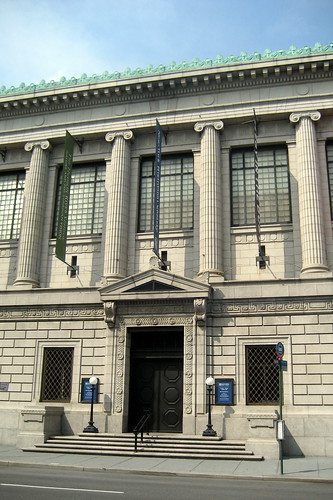
The Conservation department at the New-York Historical Society is again looking for interns. It is for this summer and it is a paid internship. Please pass on this information to anyone who might be interested.
The summer internship is a full-time program for graduate and undergraduate students and interns work Monday through Friday from June 14th through August 6th. During the workweek, interns also take part in regularly scheduled cultural excursions and luncheon lectures. Students may receive a stipend of $2000 for the completion of the program or they may complete the program for credit. Applications are due by 5PM on Monday, March 8, 2010.
Interns in the conservation department receive practical hands-on training in book and paper conservation at an intermediate level. This internship is for individuals who have at least a bachelor’s degree and who have 1-2 years of practical experience working in book and paper conservation, or for students currently enrolled in a formal conservation training program. Interns will undertake and complete a project based on their interests and skills and the needs and capabilities of the Conservation Department. At the end of the internship period, the intern will be required to produce a written report and possibly deliver a presentation of their work. An interview with the Senior Conservator is required (preferably on-site) and candidates should present a portfolio of completed treatments at that time.
To apply for an internship, please submit the following:
-
A cover letter that indicates the specific department(s) with which you would like to be placed;
-
A resume;
-
Two recommendations (at least one from a professor);
-
Some applicants may be required to provide a portfolio or other information, but they will be notified of this when they are called for an interview.
All applications must be submitted electronically only. Please email completed application package to internships@nyhistory.org with your name in the subject line. The cover letter, resume, and writing sample should be submitted together in one email. Recommendations must be emailed directly from the reference to internships@nyhistory.org and should have “Recommendation for Applicant’s Name” as the subject.
If you have any questions about this program, please contact Betsy Gibbons by email at internships@nyhistory.org or by phone at 212-485-9281.
Thanks,
Betsy
Betsy Gibbons
Manager of High School and College Programs
New-York Historical Society
170 Central Park West
New York, NY 10024
212-485-9281
bgibbons@nyhistory.org
Manager of High School and College Programs
New-York Historical Society
170 Central Park West
New York, NY 10024
212-485-9281
bgibbons@nyhistory.org
Wednesday, February 3, 2010
Education and Training Committee Looking for Student Liaison
The Education and Training Committee is looking for a current student to serve as a student liaison on our committee. The student liaison term would serve a 1 or 2 year term, depending upon their anticipated graduation, and begin after the 2010 Annual Meeting. Contact the ETC Chair, Jennifer Hain Teper (jhain@illinois.edu) if you are interested.
Subscribe to:
Posts (Atom)


 Posts
Posts

